
How AI Is Changing the Way People Prepare for Job Interviews
AI-powered interview practice is replacing outdated prep methods. Here's how the shift is happening and what it means for job seekers.
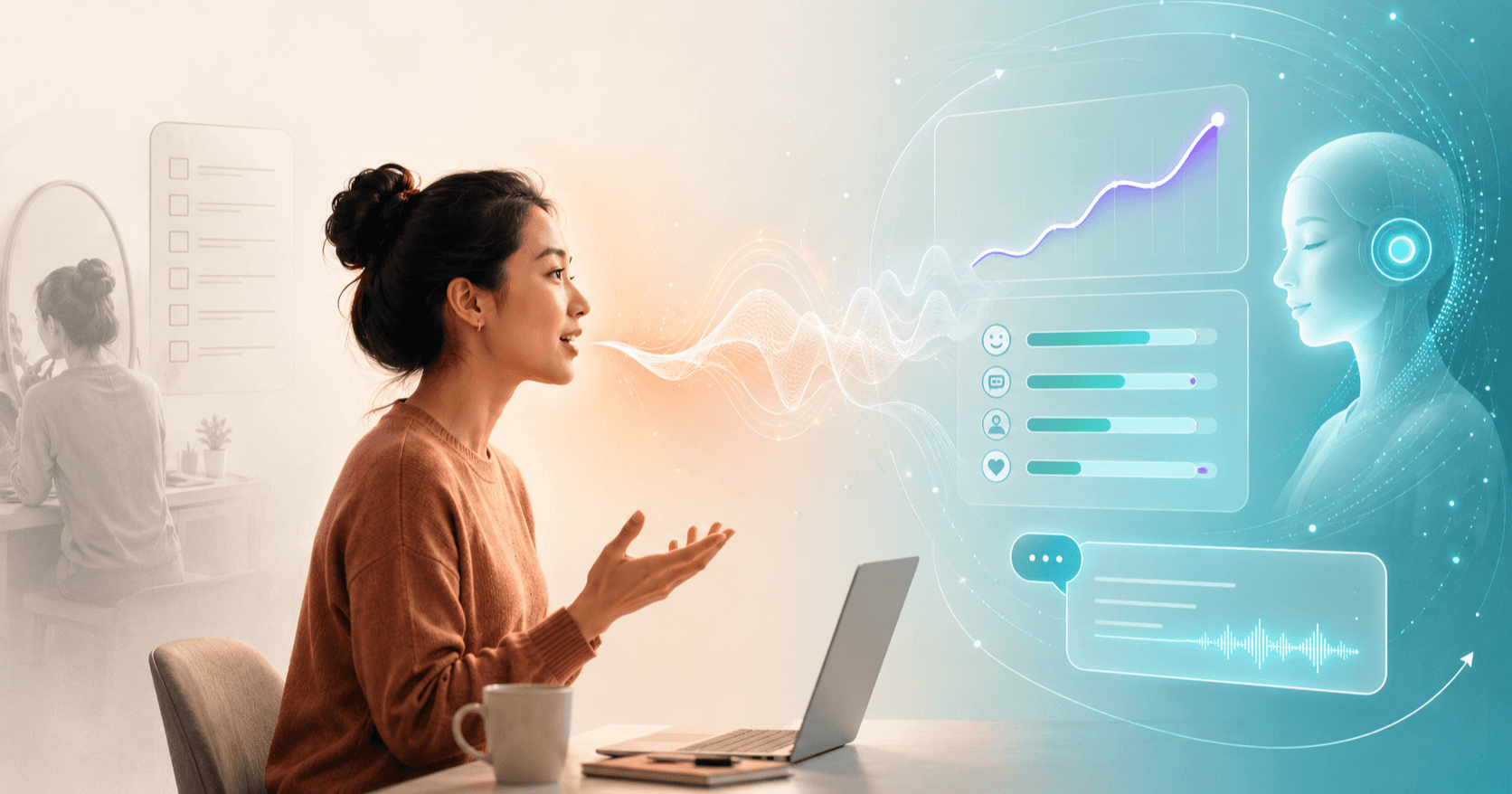
For decades, interview preparation looked the same: read a list of common questions, rehearse answers in front of a mirror, and maybe run through a mock session with a friend who doesn't really know how to give feedback. It worked, sort of. But the gap between that kind of practice and a real interview has always been wide.
AI is closing that gap — fast.
The Problem with Traditional Interview Prep
Traditional preparation has three fundamental limitations:
No real feedback. Practicing in front of a mirror tells you nothing about whether your content is strong, your structure is clear, or your answer actually addresses the question. Friends and family mean well, but most aren't trained interviewers.
No adaptability. A list of "top 50 interview questions" doesn't adjust to your experience level, target role, or the specific company you're interviewing with. You end up practicing answers to questions you'll never be asked while missing the ones that matter.
No consistency. People practice when they feel like it, skip the hard questions, and stop when they feel "ready enough." There's no structured feedback loop, no way to track improvement, and no accountability.
What AI Changes
AI-powered interview practice solves each of these problems:
Real-Time, Specific Feedback
AI can evaluate your answers across multiple dimensions — content accuracy, communication clarity, logical structure, professionalism, and even language fluency. Instead of a vague "that was pretty good," you get specific feedback: your answer scored 72 on content because you missed a key technical concept, and here's what a stronger answer looks like.
Adaptive Questions and Follow-Ups
The best interviewers don't just read from a script. They listen to your answer and probe deeper. AI does the same thing. If your answer is strong, the next question is harder. If you're vague, the AI asks a follow-up to give you a chance to demonstrate your knowledge. This mirrors what happens in real interviews far more closely than a static question list.
Structured Practice with Measurable Progress
When every session is scored and tracked, you can see exactly where you're improving and where you're stuck. Over weeks of practice, patterns emerge: maybe your technical content is strong but your structure needs work, or your behavioral answers lack specific examples. That data turns vague anxiety into actionable focus.
Different Formats for Different Situations
The interview landscape itself is more varied than ever. Beyond traditional one-on-one Q&A, candidates now face:
- Technical screens with live coding and system design
- Behavioral panels with multiple interviewers
- Case studies and group discussions
- Pitch presentations and product demos
- Performance review simulations for management roles
AI-powered platforms can simulate all of these. A candidate preparing for a senior engineering role can practice system design questions in the morning, behavioral STAR-method answers at lunch, and an elevator pitch in the evening — all with scored feedback.
Audio Practice Changes Everything
One of the biggest shifts is the move from text-based practice to voice. Typing an answer to an interview question is a fundamentally different activity than speaking one. The skills that matter in a real interview — pacing, confidence, thinking on your feet, recovering from a stumble — only develop when you practice out loud.
AI speech-to-text has become accurate enough that voice-based practice is now viable at scale. You speak your answer, the AI transcribes and evaluates it, and you get feedback on both what you said and how you said it.
The Accessibility Factor
Perhaps the most significant impact of AI interview prep is access. Professional interview coaching costs $100–300 per hour. Not everyone has a mentor in their target industry. Not everyone has friends who can simulate a technical interview or a founder pitch.
AI democratizes this. Anyone with an internet connection can get structured, scored, personalized interview practice — at any time, for any role, at any difficulty level. A first-generation college student preparing for their first job interview gets the same quality of practice as someone with a network full of industry veterans.
What This Means for Job Seekers
If you're preparing for interviews in 2026, here's the practical takeaway:
- Use AI practice as your baseline, not a supplement. It's more consistent and more honest than most human practice partners. Platforms like PokeBot offer mock interviews across multiple formats — technical, behavioral, resume-based, job fit, and even pitch & demo — so you can practice exactly what you'll face.
- Practice in audio mode whenever possible. Text practice builds content knowledge, but audio practice builds interview skills. PokeBot's audio mode transcribes your spoken answers and evaluates both content and delivery.
- Track your scores over time. The data will tell you when you're ready far more reliably than your gut feeling. PokeBot's Progress Tracker shows score trends across all your sessions, so you can see real improvement over weeks of practice.
- Practice the specific format you'll face. If your interview includes a pitch, practice pitching. If it includes a group exercise, practice group discussion. Generic preparation is the old way. PokeBot supports specialized formats including case interviews, group discussions, performance reviews, and elevator pitches.
- Combine AI practice with human practice. AI gives you the reps and the feedback. A real person gives you the social pressure and unpredictability. Both matter.
- Build the full picture. Interview prep doesn't happen in isolation. Use career planning tools to identify your skill gaps, optimize your resume to match your target roles, and track your growth over time. PokeBot connects all of this — your career plan, resume, interview practice, and progress — into one integrated workflow.
The era of reading "top interview questions" and hoping for the best is ending. The tools are here. The question is whether you'll use them.