
The Coffee Chat Playbook: Questions, Asks, and Follow-Ups That Convert to Referrals
A word-for-word playbook for coffee chats: how to request one, what to ask during the call, and the follow-up sequence that turns conversations into referrals.
Last updated: August 2026.
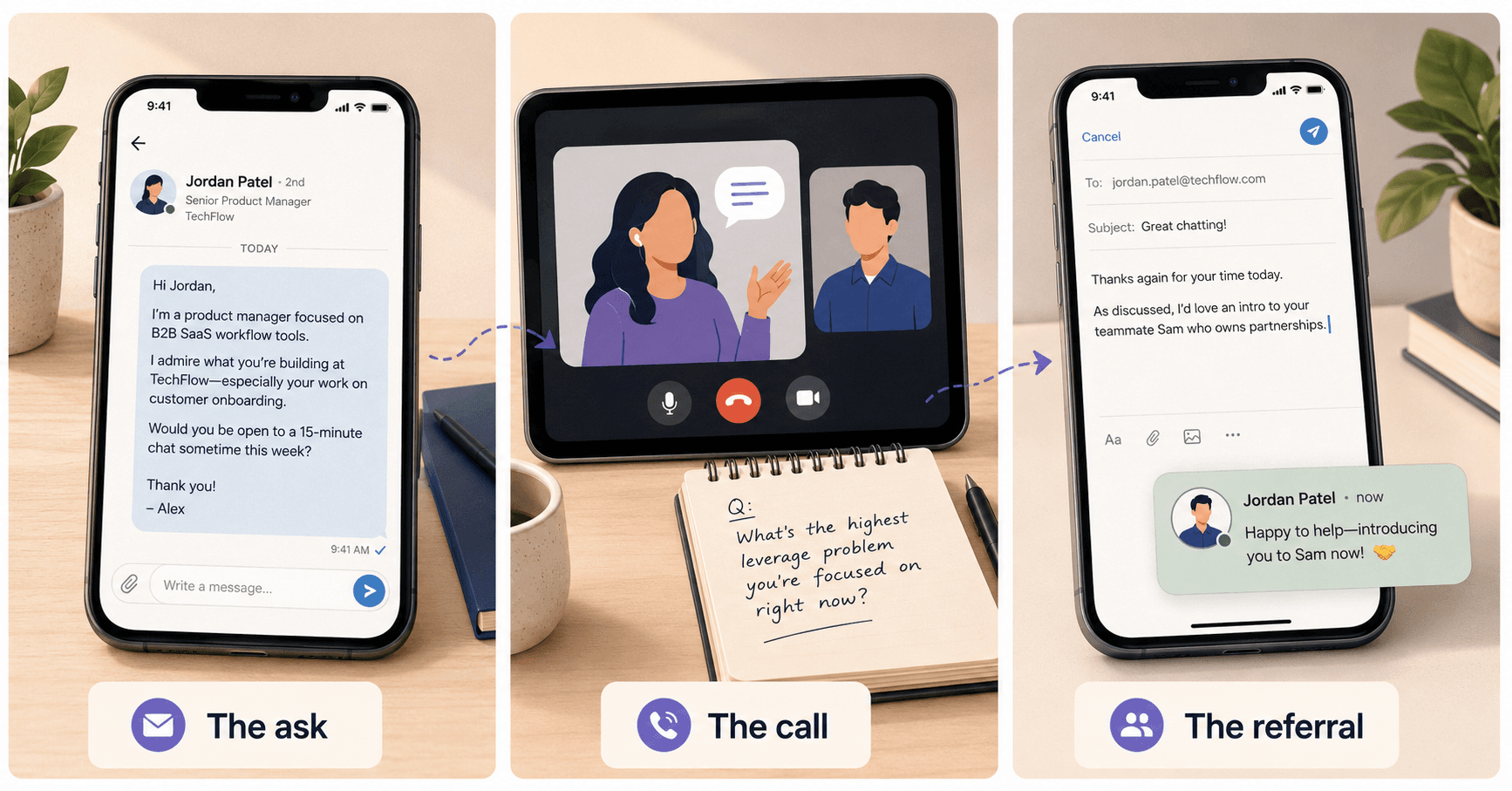
Quick answer: A coffee chat is most likely to lead to a referral when you treat it as a conversation. Ask about their path and the team, and say nothing about job applications during the call. Send a specific thank-you the same day with one detail that shows you listened. About a week later, make one direct ask: name the role and the firm, and ask whether they'd flag your name.
The most useful coffee chat advice tends to sit deep in Reddit comment threads. What you find at the top of careers listicles is usually some version of "be genuine" and "ask good questions," which is correct but not much help. It doesn't say what questions to ask, when to bring up the referral, or how to avoid turning a warm contact into someone who reads your follow-ups and never replies.
This post gives you the word-for-word sequence.
Why Does a Coffee Chat Work?
At many firms, a referred candidate doesn't land in the same stack as everyone else. An internal mention gets your resume in front of a person, and sometimes it lets you skip the first screen entirely. That's the same argument behind warm intros over cold applications. The difference with a coffee chat is that you build the relationship first, which makes the referral more credible than one you requested cold.
At many companies, cold applications are getting harder to turn into interviews as volume rises. The person who gets on a 20-minute call and asks smart questions is far easier to remember than application number 400.
How Do You Request the Chat?
Keep the request short, specific, and easy to say yes to.
The version that gets ignored:
"Hi, I'm really interested in your company and would love to pick your brain about your career and the industry and get any advice you might have for someone in my position."
A version that gets a response:
"Hi [Name], I came across your profile researching [Firm's] [Group]. I'm a junior at [School] heading into [Role] recruiting and would love 20 minutes to hear about your path. Happy to work around your schedule. Anything in the next two weeks?"
What that message does:
- One specific reason for reaching out to this person (their path or something they published)
- A defined time ask (20 minutes rather than "some time")
- An easy opening to decline ("happy to work around your schedule")
Send via LinkedIn InMail or email. A direct email, when you can find it, often gets a faster response. Follow up once after a week if you hear nothing, and leave it there.
What Do You Ask During the Call?
Prepare four or five questions before the call. Aim for a conversation where they're talking 70 percent of the time.
Questions that tend to open up honest answers:
- What does a typical week look like for you right now?
- What's the steepest part of the learning curve for a new analyst on your team?
- How does [Firm] approach [deal sourcing / client coverage / whatever fits their group] differently from what you expected coming in?
- If you were recruiting again from scratch, what would you do differently?
- Is there anything about the culture you'd want a strong candidate to understand that doesn't come through in public information?
| Reach for this | Skip this |
|---|---|
| "What surprised you about the culture after you started?" | "What's the culture like?" |
| "What's been the most interesting project you've worked on recently?" | "What do you like most about your job?" |
| "What separates analysts who ramp fast from those who struggle?" | "What does it take to succeed here?" |
| "What do you wish you'd known before recruiting for this role?" | "What advice would you give me?" |
The questions on the left ask about something specific, so they tend to get honest answers. The ones on the right are easy to answer with a stock line.
Two topics to drop entirely from a first coffee chat: compensation and whether they'll refer you. Both make it look like you came for what they can give you.
How Do You End the Call?
Thank them for their time and name one specific thing that was useful. Instead of a general "this was great," say something like "the point you made about deal sourcing exposure changed how I'm thinking about which groups to target."
Then tell them you'll be in touch as the recruiting cycle moves forward. Don't bring up applications or referrals here.
What Goes in the Follow-Up?
Send the thank-you the same day, within a few hours of the call.
Thank-you email:
Hi [Name],
Thank you for taking the time today. The point you made about [specific thing they said] changed how I'm thinking about [related topic]. I'll carry that into the process. I hope we can stay in touch as things develop.
[Your name]
It includes one sentence that shows you listened, and no ask.
Then, about a week to ten days later, if you're actively applying to their firm:
Referral ask:
Hi [Name],
Following up quickly: I'm planning to apply to the [Specific Role] at [Firm] in the next week or so. Given our conversation, would you feel comfortable flagging my name internally? Happy to send my resume if it would help.
[Your name]
That message works because it's narrow: it names the role, asks a yes-or-no question, and makes the action simple. Someone who wants to help you can do it in two minutes.
If they say they're not in a position to refer you, thank them and find another contact at the company. This one ask didn't work out, but the relationship is still there.
| Step | Action | Timing |
|---|---|---|
| Same day as call | Send specific thank-you | Within a few hours |
| Applying to their firm | Send referral ask | 7-10 days after call |
| No response to referral ask | One follow-up, then move on | 5-7 days after ask |
| They agreed but nothing happened | Re-offer to draft the message | 1 week after agreement |
What Comes After?
Whether or not they refer you, stay in light contact. Send a note when you see something relevant to their group. Let them know when you get an interview at their firm. Tell them the outcome, whatever it is.
People are more willing to refer someone they remember from a conversation than a name that sent them a LinkedIn message six months ago. The call is the start of that relationship.
For the full outreach approach, including how to find the right people and what to put in the initial message, How to Ask for a Warm Intro covers the targeting and ask template in detail.
Once the coffee chat leads to an interview, the preparation shifts. The same presence that worked in a 20-minute call needs to hold up under direct pressure. Practicing your answers out loud (with follow-up questions, time pressure, and feedback) is how you build that before it counts. PokeBot's Interview Practice lets you drill behavioral questions generated for the role you're targeting, and if you're interviewing in finance, its Finance & Modeling type covers valuation, accounting, and DCF/LBO walk-throughs. And if you want to prepare the full behavioral answer bank before you ever pick up the phone, the STAR method guide is a solid starting point.
Frequently Asked Questions
What is a coffee chat in networking?
A coffee chat is an informal 20-30 minute call with someone at a company you're targeting. You're there to learn about their path and the role, so save the pitch. A referral, when it comes, grows out of a good conversation; you don't ask for one during the call.
How do I ask for a coffee chat without it feeling pushy?
Keep the request short and specific. Name one thing about their work or career path that made you reach out. Skip 'pick your brain': it's vague and signals you have no agenda. Ask for 20 minutes to hear about their experience at the firm. Most people respond well to a respectful, targeted ask.
What should I ask during a coffee chat?
Ask questions that get honest, unrehearsed answers. What does a typical week look like on their team? What separates analysts who ramp fast from those who don't? What do they wish they'd known before joining? Avoid compensation questions in a first conversation.
How do I ask for a referral after a coffee chat?
Don't ask during the call. Send a thank-you the same day with a specific callback to something they said. About a week later, if you're applying to their firm, tell them the exact role and ask if they'd feel comfortable flagging your name. A narrow, easy ask is much easier to say yes to than a vague one.
How do I follow up after a coffee chat without being annoying?
Send a brief thank-you within 24 hours that references something specific they said. Then stay in light contact over time: share something relevant to their work every few months. A relationship you surface only when you need something rarely leads to a referral.
How many coffee chats should I do for one firm?
Aim for one good conversation at each firm you're serious about, ideally with two or three people at different levels. Two conversations that go well will help you more than ten surface-level ones, because referrals come from people who remember you.
Does a coffee chat guarantee a referral?
No, and expecting one makes the conversation transactional. A coffee chat that goes well improves your odds: they may volunteer to flag your name, or they'll respond warmly when you ask a week later. The goal is for them to remember you when a spot opens.