
Do Cover Letters Still Matter in 2026? When to Write One, When to Skip It
It depends on who reads your application. A by-situation table, a weak vs. strong example, and why a generic letter is worse than sending none.
Last updated: September 2026.
Quick answer: Yes, selectively: a cover letter matters when a person reads your application before deciding, and that depends on who is screening it. Write one when the posting requires it, when it's optional for a role you want, or when context adds something the resume can't convey. Skip it when the form has no upload field or when a high-volume role is screened automatically. Never send a generic version, because a letter that could go to any company is worse than none.
The variable that decides the answer is who actually reads your application, and when.
Who Actually Reads Your Cover Letter?
The answer splits along where the application sits in the hiring process.
A recruiter building a shortlist for a high-volume role is moving fast. They're reading resumes to pull names for a phone screen. Your cover letter may not be read until you're already in.
A hiring manager filling a role on their own team reads more deliberately. They own the hire. They'll often read everything you sent, and a letter that explains something your resume can't is genuinely useful to them.
That split is why cover letters don't have a single answer. They matter a great deal for some applications and go unread for others, sometimes at the same company for different roles. Writing a good one is worth the time when the right person reads it. Writing a generic one is a net negative either way.
When Should You Write One, and When Can You Skip It?
| Situation | Write? | Why |
|---|---|---|
| Posting says required | Always | Skipping marks you as someone who doesn't read instructions |
| Posting says optional | Write it | If the form takes a letter, someone may read it, and a specific one can tip a close call |
| Career change or field pivot | Always | The resume can't explain the transition; the letter has to |
| Gap of 6+ months on the resume | Write it | Context is better than letting the reader fill in a worse explanation |
| High-volume application with automated pre-screening | Skip | No human reads it until you're already past the filter |
| No upload field in the application form | Skip | There's nowhere to put it |
| Warm referral from a known contact | Write a short one | The referral already introduced you; name your referrer in the first line |
| Senior or executive role | Always | Hiring at this level is deliberate; every signal gets read |
| Creative, communications, or writing role | Always | The letter is the first writing sample |
The situations where you can safely skip are narrow. Whenever a person reads your application before deciding, a specific, well-written letter separates you from candidates who look the same on paper.
Does "Optional" Really Mean Optional?
Not for a role you actually want.
"Optional" means the letter isn't required the way a resume or portfolio is. If the form has a field for it, someone may read what you put there.
A tailored letter can tip a borderline decision. Skipping it gives up that chance.
The exception is a high-volume role with automated pre-screening, where no person reviews applications until a later stage. There, an optional letter won't be read before the screen decides.
What Should a Cover Letter Actually Say?
A resume answers what you've done and whether you can do the job. A cover letter answers why this role and what context makes you a stronger match than the resume shows on its own.
Two things that belong in it:
- Something specific from the posting. Name a problem they mentioned or a goal they're pursuing. Anything that shows you read the whole job description.
- A concrete result you've already produced that maps to what they need. One or two real outcomes. What you achieved, specifically.
And one more that is easy to leave out:
- Why this company. Something you actually know about them that explains why this role makes sense for you right now. "I admire your mission" could go to any company.
Two things to cut:
- Restating your resume in paragraph form
- Any sentence that could appear unchanged in a letter to a different company
Three short paragraphs is enough. A letter that makes its case and stops signals good judgment. One that explains everything about your career signals the opposite.
What Does Weak Look Like Next to Strong?
Both letters below are for an imaginary candidate applying to a growth marketing role.
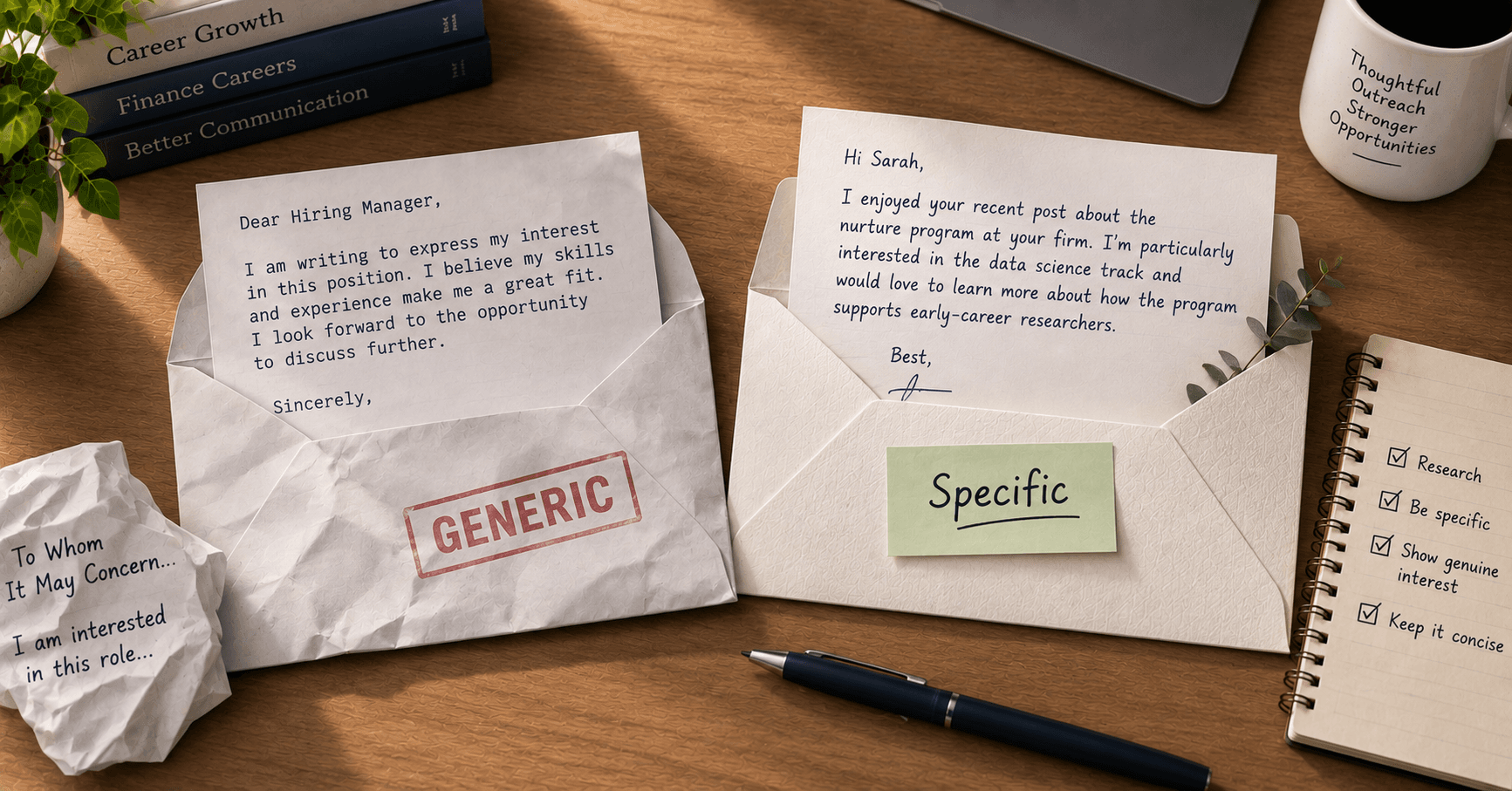
Weak:
Dear Hiring Manager, I am writing to express my interest in the Growth Marketing Manager position. I am a passionate marketer with five years of experience in B2B SaaS. I believe I would be an excellent fit for your team. I am eager to contribute to your continued success.
Apart from the job title, nothing in that letter references this company or this posting. No result. No specific detail. Change the title and it could go to 300 applications.
Strong:
The posting mentioned rebuilding your email nurture program. I spent two years on exactly that problem: cut the sequence from twelve emails to six, rebuilt segmentation around deal stage instead of sign-up date, and got pipeline-influenced revenue from email up 34% year-over-year. I'd want to understand your specific situation before saying whether the same approach applies here, but the framing looks familiar.
That letter names a specific detail from the posting. It contains a concrete result. It doesn't oversell. A hiring manager reading it knows this person actually looked at the job description before applying.
The gap between those two letters is not effort; it's research. The strong letter requires knowing one concrete thing about the role. Anyone can write the weak one without reading the posting at all.
Why Does Generic AI Output Fail in a Cover Letter?
The problem is specificity, not writing quality.
Generic AI output produces letters that look identical: state your interest, connect your background to the category, close with enthusiasm. The same words appear throughout: "eager," "passionate," and a final sentence about contributing to the team's success. There's nothing that references anything specific from the posting.
The result tells the hiring manager you ran a prompt without reading their job description. That's the actual problem with unedited AI output in cover letters: it removes the one thing a letter was supposed to provide.
AI assistance as a starting point is fine. A letter that goes out without any tailoring to the actual posting is noise. It hurts you because it signals you didn't do the research.
For the tells that flag both resumes and cover letters as unedited AI output, see the AI tells recruiters notice on sight.
PokeBot's Resume Studio, in the Resume Builder room, drafts a cover letter from your resume and the job description you paste in, so the first draft starts from the posting. Before you send it, add what only you know: why this company, right now.
What Do You Do Before You Start Writing?
Read the posting and find one or two things they mention that you've specifically done. If you can't find one, you probably don't know enough about this company to write a convincing letter anyway. That's useful information before you spend the time.
Then write a single opening paragraph that names one of those things and connects it to a real result. If that paragraph doesn't land, the rest of the letter won't either.
Before any of this, your resume has to be strong enough to get a human to the cover letter stage. A weak resume that gets filtered before anyone reads it means the cover letter never mattered. Will My Resume Pass ATS? explains what happens to a resume before a person sees it, and 12 signs your resume is getting quietly rejected covers what to fix if it isn't getting through.
If you're not sure your resume clears the bar, get it scored first.
Frequently Asked Questions
Do cover letters still matter in 2026?
Yes, selectively. For smaller employers and any role where written communication is part of the job, a cover letter can tip a close decision. For high-volume automated-screening applications, it often goes unread until you're already past the filter. The mistake is skipping it everywhere or writing a generic one everywhere. A form letter that could go to any company is worse than no letter.
Does 'optional' mean I don't have to write one?
For roles you actually want, treat optional as expected. 'Optional' means the letter isn't required the way a resume is. If the form has a field for it, someone may read what you put there, and a specific, tailored letter can tip a borderline decision. Leaving the field empty gives up that chance.
What should a cover letter say in 2026?
Name one specific thing from the posting, connect it to a concrete result you've already produced, and explain why this role. Three short paragraphs is enough. The letter should answer what the resume can't: why this company, why now, and what context makes you a stronger match than the resume alone shows.
How long should a cover letter be?
Three short paragraphs, or about half a page. A letter that makes its case and stops is better than one that explains your whole career. Length beyond that can signal difficulty editing yourself, which is its own signal for roles that involve writing.
Should I write a cover letter when I have a referral?
If the application has a field for one, yes, but keep it short and name the person who referred you in the first line. The referral has already made the introduction, so the letter only needs to connect one point from the posting to one result of yours. A generic form letter would waste the warmth the referral created. If there's no field, a brief note your referrer can forward does the same job.
What makes a cover letter backfire?
Two things: restating what's already on your resume, and sending one version to every application. A letter that could have gone to any company for any role signals you didn't bother learning about this one. A reader can spot that pattern from the opening line.
Can hiring managers tell if a cover letter was AI-generated?
They can tell when it's generic, which is how unedited AI drafts read. The tell is the absence of specifics: stock phrasing, words like 'eager' and 'passionate,' and nothing that references anything specific from the posting. A letter that could describe any candidate's background for any job in the category reads as a template, regardless of how it was written.